


We live in an era that glorifies spectacular transformations. Social networks show us dazzling successes, physical metamorphoses in a few weeks, life courses that seem to change overnight.
Yet, in nature as in our body, true transformations rarely occur in this way. They are the fruit of a multitude of almost invisible micro-changes.
This is precisely the essence of kaizen.
Born in Japan, the word is composed of two ideograms: Kai (change) and Zen (best). It literally means “change for the better”, thanks to continuous improvement.
This philosophy revolutionized Japanese industry after the Second World War, especially at Toyota. But limiting it to the business world would miss out on its true wealth: it is above all a way of approaching life.
A story born in the industry
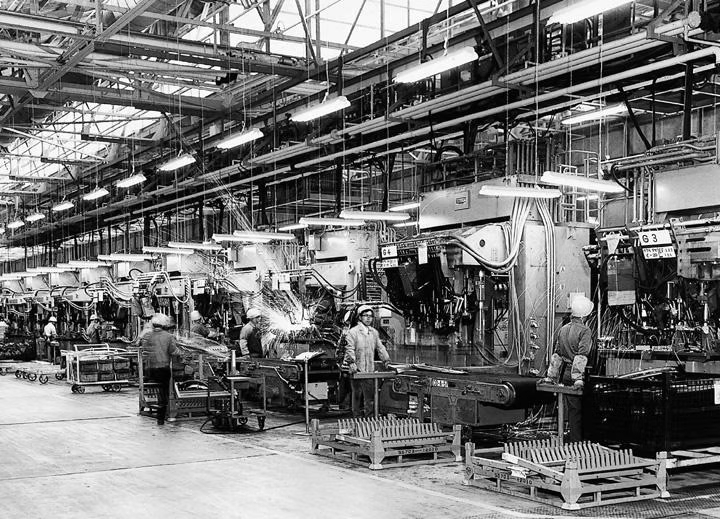
Kaizen is not a recent marketing concept. Its roots date back to Japan in the 1950s, in a country then devastated by war and deprived of resources. American quality experts, including Deming and Juran, teach statistical control and the PDCA cycle (Plan, Do, Check, Act). This teaching finds a particularly fertile ground in Japanese culture, and it is at Toyota, under the impetus of the engineer Taiichi Ohno, that the method is applied for the first time on a large scale, with the direct involvement of the operators in the field.
The word “kaizen” and the concept as we know it today do not spread in the West until much later. It was Masaaki Imai who popularized the notion in 1986 with his work “Kaizen: the key to Japanese commercial success”, and who founded the Kaizen Institute the same year to support Western companies.
I myself was trained in Kaizen several years ago, within a large international industrial group. I saw to what extent this discipline, born to optimize production lines, was actually based on a universal principle: respect for rhythm, regularity, everyone’s involvement in its own improvement process. These are exactly the same laws that I observe today in energy support.
Deming’s wheel, or the art of never being discouraged
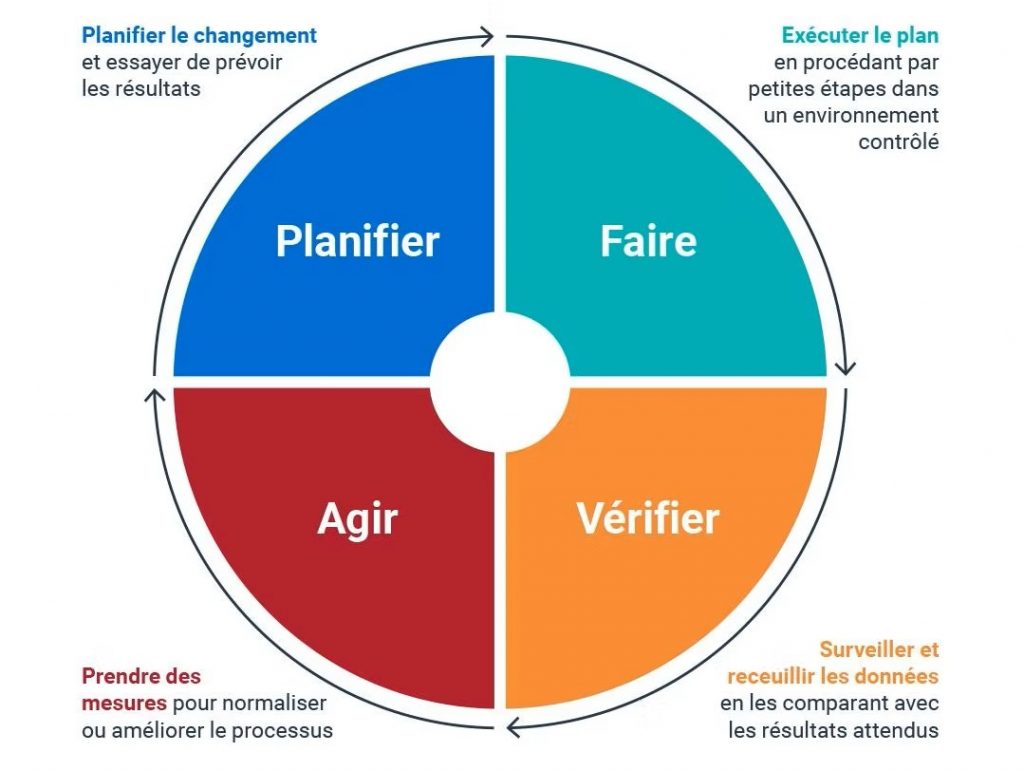
The PDCA, often referred to as the “Deming Wheel” of the name of the American statistician who popularized it, is based on four stages that are repeated in continuous loop: plan (plan an action), do (react it, often on a small scale), check (observe the result) and ACT (adjust, then restart a new cycle).
The image of the wheel is not insignificant. A spinning wheel never seeks perfection in a single turn, it advances, it corrects its trajectory, it leaves. This is exactly what I teach my students when we work on magnetic passes.
A pass doesn’t have to be perfect to be useful. We put the intention, we realize the gesture (plan, do), we observe what we feel in the hands, the breath of the receiver, the signs of relaxation (check), then we adjust the position, the slowness, the pressure of the next gesture (ACT). And we start again.
Many beginners get discouraged because they are looking for the perfect pass from the first sessions. However, as in Kaizen, it is not the perfection of the first gesture that builds mastery, it is conscious repetition, passes after pass, session after session. Confidence does not come from the absence of error, it comes from the number of wheel turns accomplished.
This is what I systematically remind my students: each imperfect pass already advances the wheel. It is she, and not an immediately successful magic gesture, who builds a self-confident magnetizer.
Energy follows the movement

In my practice, I often see the same thing: many people want to regain their energy, reduce their stress or regain an inner balance, but they want everything to change immediately.
However, our nervous system, our body and our habits naturally resist too brutal changes. Conversely, a small change repeated each day ends up profoundly changing our energy state.
Five minutes of breathing. ten minute walk. Two minutes of silence before starting his day. Drink more water. Turn off your phone thirty minutes before sleeping.
These gestures seem insignificant. However, they are gradually creating a new inner dynamic. Energy doesn’t like jerks, it likes regularity.
Kaizen and neuroscience
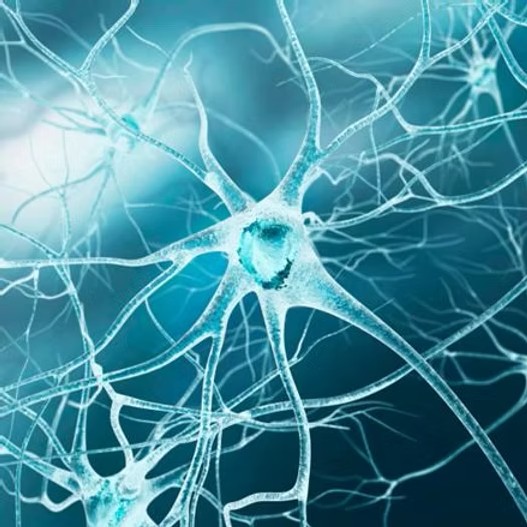
Neuroscience today confirms what this philosophy has been teaching for a long time. The brain learns through repetition: each repeated action strengthens neural connections, and what required effort gradually becomes a habit.
Conversely, wanting to revolutionize everything in one day often triggers mechanisms of resistance, fatigue or abandonment.
The smallest step is often the one that the brain accepts. And it is precisely the one who opens the door to the next.
An energy reading
If we observe the energetic, Eastern or Western traditions, one principle constantly comes up: energy circulates where there is movement.
Stagnant water eventually becomes cloudy. A river that advances remains alive. The same goes for us.
Kaizen consists of bringing energy back into circulation, without violence, without fighting against oneself. Every little victory strengthens our confidence, every progress nourishes our vitality, every positive habit becomes a new inner frequency.
The trap of perfection
The greatest enemy of change is not failure. It’s perfection.
How many people give up meditating because they don’t have twenty minutes, when three minutes would already be precious? How many give up sport because they can’t do an hour, when ten minutes would be infinitely better than nothing?
The Kaizen reminds us that it is always better to take a step forward than to remain motionless while waiting for the perfect moment.
Kaizen applied to energy and stress

Here are some micro-habits that I often offer in session, to choose only one at a time:
- Three deep breaths before each meal
- A minute of gratitude when you wake up
- Walk to the first intersection before taking the car again
- Putting your phone away from bed
- Take a two-minute silent break between two appointments
Kaizen applied to weight and diet

The weight ratio follows exactly the same logic. Brutal diets often fail because they ask the body and brain for too rapid a change, which triggers the mechanisms of resistance mentioned above.
Some examples of small steps, to be integrated one by one:
- Add a serving of vegetables to the evening meal, without removing anything else
- Replace a glass of soda with a glass of water, once a day
- Walk ten minutes after lunch
- Eating the first five bites of a mindful meal, without a screen
- Go to bed fifteen minutes earlier to better regulate the hunger for the next day
The goal is never deprivation. It is the regularity that transforms the body, not the intensity of a punctual effort. Only one of these gestures, held twenty-one days, is already changing the relationship to food more durably than a strict diet abandoned after a week.
A daily practice
I offer you a very simple exercise: choose a single action that requires less than two minutes. For twenty-one days, achieve it every day, without exception. No more.
When this action becomes natural, add a second. Then a third.
After a few months, your daily life will be profoundly different. Not thanks to heroic effort, but thanks to the power of small steps.

The real mastery
In energy, as in personal development, mastery is not about achieving exploits. It consists in becoming able to repeat the right gestures with consistency.
The kaizen teaches us that sustainable transformation does not come from motivation. It is born from the gentle discipline, the one that respects our rhythm while inviting us, every day, to become a slightly better version of ourselves.
Because deep down, a life does not change in an instant. She changes one step after another.