
Imagine opening a sealed vase for more than 3000 years and discovering a golden substance, intact, ready to be tasted. This scenario is not science fiction, but a fascinating archaeological reality. During the opening of the Tomb of Tutankhamen in 1922, archaeologists made an astounding discovery: jars filled with honey, perfectly preserved despite the past millennia. This imputrescibility of honey defies our usual understanding of perishable foodstuffs. How can a natural food, without any artificial preservatives, cross the ages without deteriorating?
Honey does not expire. This statement, however surprising it may be, is based on a complex alchemy between unique chemical properties and precise energy work carried out by bees. Beyond its exceptional biochemical composition, honey is the fruit of a sacred geometry – the hex – and specific vibrations that give it an almost magical dimension. In this article, we will explore the mystery of eternal honey, by forging links between scientific rigor, spiritual symbolism and the ancestral traditions that venerate this nectar of the gods.
Why does honey never expire?
Exceptional scientific properties
Tutankhamian honey: 3000 years and always edible
The discovery of ancient honey in the Egyptian burials is one of the most tangible evidence of the incredible preservation capacity of this substance. In ancient Egypt, honey was not just a prized food; It was sacred, used to embalm bodies, heal wounds and honor gods. When the explorers tasted this three millennial Tutankhamun honey, they found that it had retained its aromas, although crystallized.
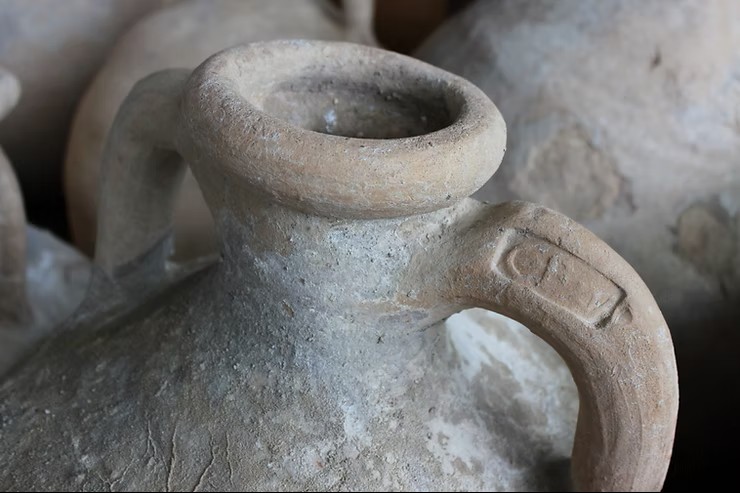
This phenomenon is explained by the fact that honey is a hostile environment for bacteria and mold. The Egyptians, masters of conservation, had intuitively understood that honey was a substance of eternity. Sealed honey jars have also been found in Georgia, dating back over 5,000 years, confirming that honey does not expire until it is kept away from moisture. This exceptional longevity makes it the only natural food capable of going through history without deteriorating.
The secrets of the imputrescibility of honey
Modern science allows us today to decipher the exact mechanisms that make honey rot-proof. Three key factors come into play, creating a perfect synergy for conservation:
- Very low water content: honey contains on average only 17% water. At this level of drought, bacteria and fungi cannot proliferate. They die by dehydration (osmosis) before they can spoil the product. This is called water activity (AW), which is too low in honey to allow microbial life.
- An acid pH: with a pH oscillating between 3 and 4.5, honey is a very acidic environment. This acidity comes from various organic acids, including gluconic acid, formic acid and citric acid. Most pathogenic bacteria, such as those responsible for botulism or salmonella, cannot survive in such an environment.
- Hydrogen peroxide: When bees transform nectar, they add an enzyme called glucose oxidase. This enzyme converts sugar into gluconic acid and produces hydrogen peroxide – more commonly known as hydrogen peroxide. This compound gives honey powerful antibacterial and antiseptic properties, preventing contamination.
It is this unique combination of hygroscopy, acidity and enzymes that makes honey a natural antiseptic honey par excellence, capable of being preserved indefinitely.
How bees make honey
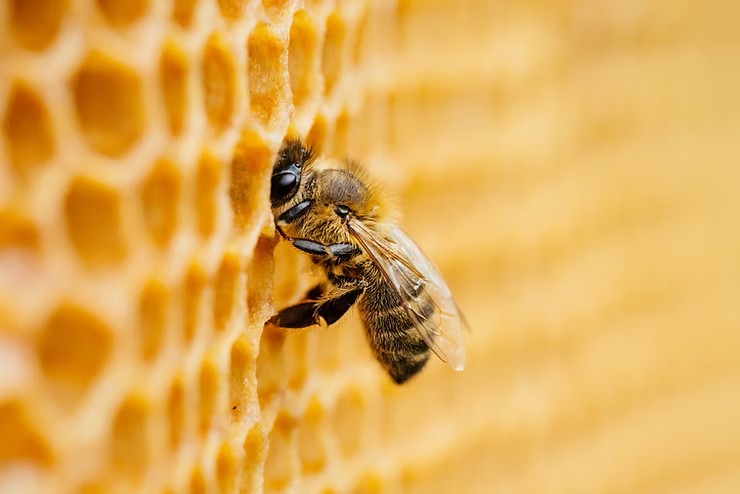
The honey production process is a true biological engineering feat. It all starts when the forage bee harvests the nectar from the flowers, a solution rich in water and complex sugars. This nectar is stored in its crop, a kind of “reservoir” stomach distinct from its digestive stomach. This is where the chemical transformation begins: bee enzymes begin to break down complex sugars (saccharose) into simple sugars (glucose and fructose).
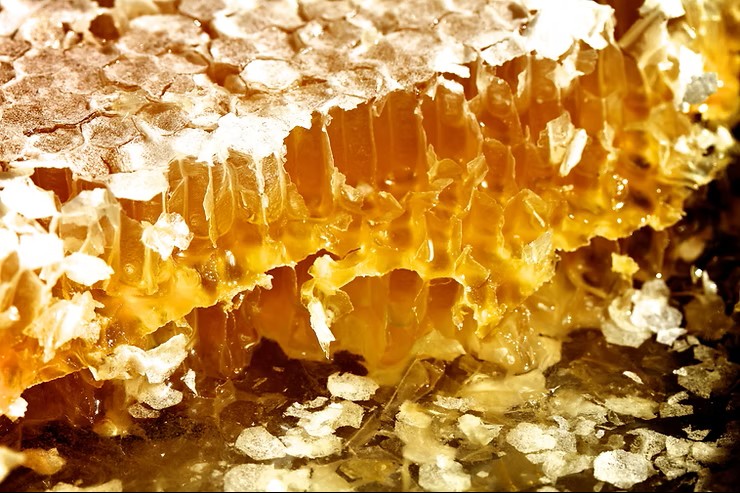
Back at the hive, the forager transmits the nectar by trophallaxy (mouth-to-mouth) to the recipient bees. This repeated transfer enriches the nectar with enzymes and already reduces its water content. Then the bees deposit the nectar in the alveoli. To achieve the ideal concentration of 17% water, the bees ventilate the hive by flapping its wings frantically. This active evaporation transforms liquid nectar into a thick, golden syrup: honey. Once the good consistency is reached, the alveolus is sealed with a wax seal, guaranteeing a natural preservation of the perfect honey.
the sacred hex:
The perfect geometry of bee alveoli
Why do bees build in hexes?
If you observe a hive radius, you will be struck by the perfect regularity of the hexagonal cells. Why this shape with 6 sides and not circles, squares or triangles? The answer lies in a relentless mathematical optimization that bees have mastered for millions of years.
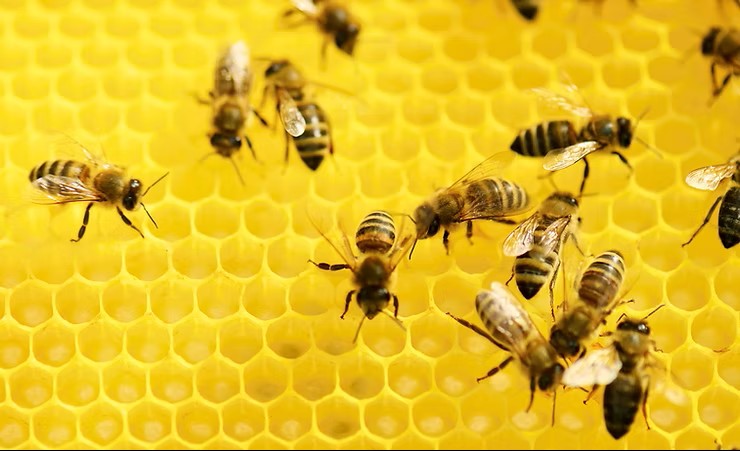
The objective of the bees is to store a maximum of honey using a minimum of wax (which is costly in energy to produce). Mathematicians have proven, through the “honeycomb theorem”, that the hexagon is the geometric shape that allows you to pave a plane without leaving an empty space, while offering the shortest perimeter for a given surface. By choosing the hexagon Bee, the colony saves its resources and maximizes its storage space. It is a lesson in architectural efficiency and collective intelligence.
the sacred geometry of the hexagon through cultures
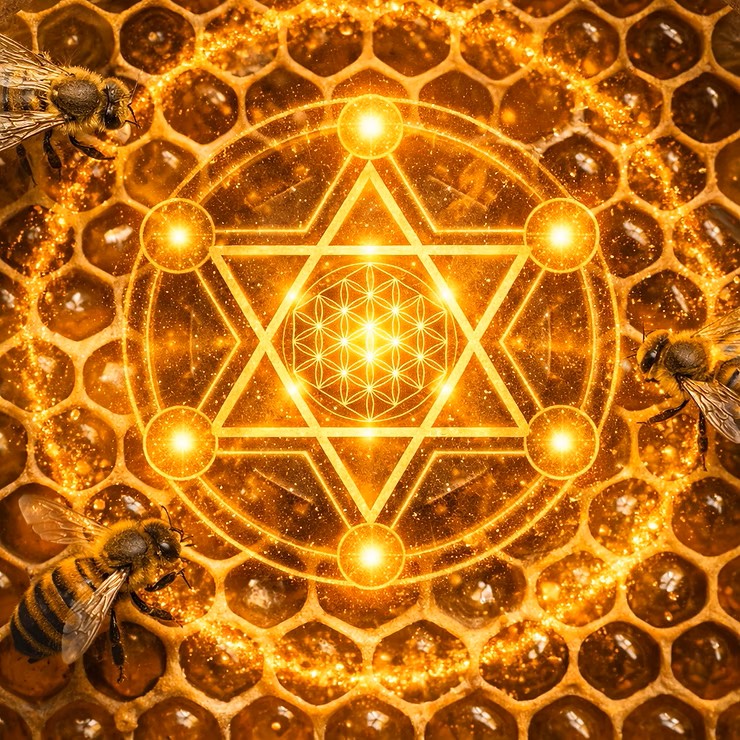
Beyond the utilitarian aspect, the hexagon has a deep meaning in sacred geometry. With its 6 sides, 6 vertices and 6 angles, it is the symbol of cosmic harmony, the balance between the top and the bottom, the material and the spiritual.
- Solomon’s seal: the hexagon is intimately linked to the six-pointed star (hexagram), formed by two intertwined triangles. This symbol, known as the seal of Solomon or Star of David, represents the union of opposites: fire and water, heaven and earth, masculine and feminine.
- Chrism: In the primitive Christian tradition, the six-branched cross or chrism is often part of a hexagonal form, symbolizing Christ as the center of the universe.
- The number 6: in numerology, the 6 is the number of harmony, beauty and unconditional love (associated with Venus). The hexagon Symbolism evokes the perfection of creation manifested in matter.
Cathedral builders and ancient temple architects frequently used this form to structure the sacred space, inviting celestial energies to anchor themselves in the earth.
France in nature
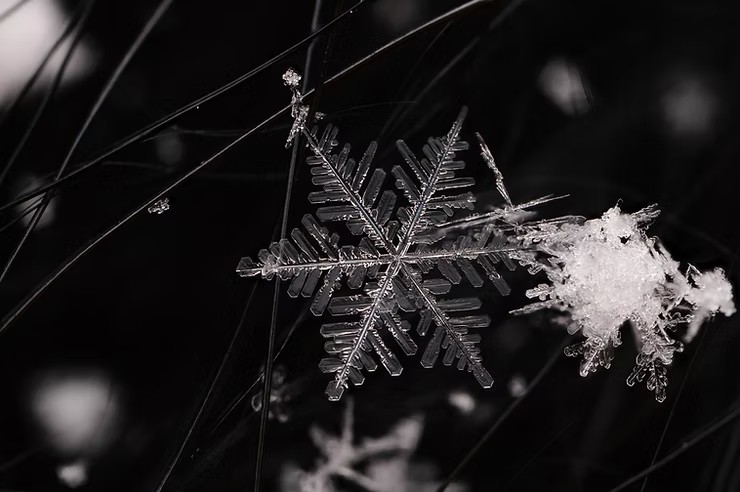
The hexagon is not an invention of bees; It is a fundamental form of the organization of matter in the universe. We find hexagonal natural geometric shapes everywhere:
- Snowflakes always crystallize in hexagonal symmetry.
- Basaltic organs, like the Giant’s pavement in Ireland, form perfect hex columns when the lava cools.
- Soap bubbles, when pressed against each other, naturally adopt hex walls to minimize surface tension.
- The molecular structure of graphene (carbon) is a hexagonal network.
This omnipresence suggests that the hex nature is a signature of universal energy efficiency.
The bees:
Vibratory architects and energy messengers
Vibratory frequencies of bees (200-300 Hz)
Everything in the universe is vibration, and bees are masters in the matter. Studies have shown that during the construction of the rays, bees emit specific bee vibrations, between 200 and 300 Hz. In flight, their characteristic buzzing hovers around 230 Hz (the so flat note).
This phenomenon evokes the cymatic, the science which studies the visualization of sounds. When sand or water is subjected to certain sound frequencies, the material is spontaneously organized into complex geometric shapes… often hexagonal! It is very likely that bees frequencies play an active role in wax sculpture, acting as an invisible “moss mold”. Vibratory honey is therefore informed, from its genesis, by these harmonious sound waves.
Honey: a food with high energy frequency
In dowsing and bioenergy, the “vitality” of food in Bovis units is measured. Raw, unheated and unpasteurized honey has an exceptionally high vibratory honey rate. It does not only nourish the physical body with sugars and nutrients; It also nourishes our subtle bodies.
Honey acts as a solar and floral energy capacitor. He absorbed sunlight (via plants) and the vibratory essence of flowers. By consuming energy honey, we literally ingest condensed light. This is why it is recommended in times of fatigue, convalescence or lower morale, to raise our own level of vital energy.
Why bees capture positive vibrations
Bees are endowed with an extraordinary electromagnetic sensitivity. They orient themselves thanks to the Earth’s magnetic field and communicate with each other through complex vibratory dances. This hypersensitivity makes them accurate bio-indicators of the health of our environment.
Beekeepers and geobiologists have often noticed that hives placed on specific telluric points (Hartmann or Curry network crossings) thrive more. Positive energies bees seem to be looking for these areas of high energy intensity, where other animals (like dogs) would avoid them. They transform these raw telluric energies into a substance of harmony: honey.
Symbolism of bees and honey in world spiritual traditions
Honey and bees in ancient Egypt
For the ancient Egyptians, the bee was a solar animal par excellence. A text from the Temple of Edfu says that the ancient Egypt bees were born from the tears of the sun god falling on the sand of the desert. The bee was the royal symbol of Lower Egypt (the North), adorning the titulature of the pharaohs (“the one that belongs to the rush and the bee”).
Egyptian honey was considered a “food of truth”. It was offered to the gods during daily rituals and placed in the graves to feed the deceased’s soul (Ka) in the afterlife. His imputrescibility made him the perfect symbol of eternal life and resurrection.
The sacred bees of the Mayas and the Aztecs
In Central America, the Mayas worshiped a bee without a stinger, the Melipona, which they called Xunan Kab (“bee lady” or “royal lady”). They considered beekeeping as a spiritual activity, supervised by priests. The god of honey, Ah Muzen Cab (or Colel Cab), was depicted descending from the sky with a pot of honey.
Honey from Mayan bees was used during religious ceremonies to produce the balché, a sacred drink to enter into communication with the spirits of the forest. Latin America bees were seen as living links between the earthly world and the divine world.
Bees in Asian spirituality
In India, the symbolism of the bee is omnipresent. In Hinduism, the gods Vishnu, Krishna and Indra are often associated with bees. The god of love, Kâma, has a bow whose rope is made of a chain of bees, symbolizing the softness but also the sting of the passionate love.
Blue bees are considered divine fumes. It is also said that bees feed on perfumes and beauty, which binds them to poetry and aesthetics. In Indian spirituality, the bee represents the soul that forages the essence of life to extract wisdom (honey).
Bees and honey in Greco-Roman traditions
In Greek mythology, honey is the food of the gods of Olympus, in the form of ambrosia and nectar. Zeus himself, a child, was fed honey by the nymph Melissa in a cave in Crete. The Priestesses of Demeter and Artemis were called “Melisses” (bees).
The philosophers like Pythagoras or Plato believed that the souls of the sages were reincarnated as bees. The bee was seen as a model of virtue, chastity and devotion to the community. Honey gods was synonymous with poetry and eloquence (“honey lips”).
Spiritual Connection: Cats and Bees, Guardians of the Invisible World
Cats: energy protectors and smugglers between worlds
Just like bees, cats occupy a special place in the spiritual bestiary. Revered in Egypt under the guise of the goddess Bastet, they were considered the guardians of homes and protectors against dark forces. The spirituality cat is recognized for its ability to perceive what the human eye does not see.
It is often said that the cat lives simultaneously in two worlds: the physical world and the astral world. It has the unique ability to absorb and transmute the negative energies of a place or a person. Where the dog protects the physical plane, the energy cat protects the subtle plane.
The spiritual parallel between cats and bees
There is a fascinating resonance between these two sacred animals. Both are spiritual guardians who operate by vibration. The purring of the cat (between 20 and 140 Hz) is a recognized therapeutic frequency which soothes and regenerates the tissues (ron therapy). The hum of the bee (200-300 Hz) structures matter and harmonizes the environment.
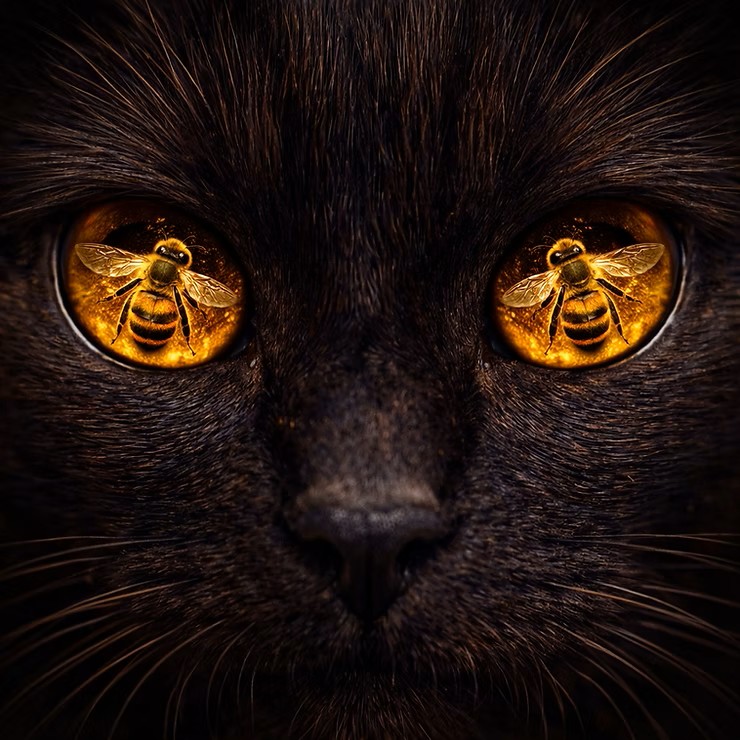
In ancient Egypt, the cat and the bee were both linked to the sun and the vital heat. They teach us the importance of maintaining a high vibrational frequency to stay healthy. Bees purify nature through pollination; Cats purify our homes by their energy presence. They are true sentries of the invisible world.
Integrating the energy of honey into your daily life: energy practices
Choose a raw and local honey
To fully benefit from the virtues of honey, it is imperative to choose raw honey, that is to say a honey that has not been heated above the temperature of the hive (about 35°C-40°C). Pasteurization kills living enzymes and destroys much of the product’s vibratory potential.
Always favor a local beekeeper. Local honey contains energy information from your own environment, which helps your body to harmonize with its place of life (principle used to combat seasonal allergies). Buying organic and ethical honey is also an act of respect for the sacred work of bees.
Consume honey in conscience
Turn the honey intake into a little honey ritual. Before consuming it, take a moment to observe its color, smell its fragrance. Mentally thank the thousands of bees who worked to produce this spoon (you should know that a bee produces less than a gram of honey in its entire life!).
You can practice a honey meditation: visualize the golden light of honey spreading through your body, bringing warmth, healing and gentleness to each cell. This conscious consumption amplifies the physical and subtle benefits of the food.
Honey in magnetism and energy care
In holistic therapy, honey can be used as an energy ointment. Applied to the skin, it helps to heal physical wounds but also to “seal” auric leaks (according to certain traditions of healers).
Honey is associated with the solar plexus chakra (manipura) due to its yellow-gold color and its link with the fire/sun element. Consuming honey helps build self-confidence, willpower, and outreach. In magnetism, he is an excellent conductor to convey the intent of healing.
Conclusion: honey, bridge between science and spirituality
Honey is much more than just a sweet treat. It is a tangible bridge between the rigor of science and the depth of spirituality. Its imputrescibility reminds us that nature holds the secrets of eternity. The perfect geometry of its rays teaches us that the universe is structured by laws of harmony and economy. The vibrations of the bees connect us to the music of the spheres.
By rediscovering the sanctity of honey, we learn to respect more these little winged sentries on which our survival depends. To eat honey is to commune with the soul of nature. It is ingesting a parcel of eternity, a code of light and geometry that resonates with our own interior structure. May we, like bees and cats, become guardians of this natural harmony.

Do you want to go further in energy exploration?
Discover our personalized supports in magnetism, hypnotherapy and energy treatments to harmonize your frequencies and regain your vital balance.